
In addition, a money market account features a minimal minimum balance requirement and no or low fees. A commercial paper is an unsecured promissory note issued by a firm with a high credit rating. Typically, commercial paper matures in less than nine months (270 days), which makes it a short-term investment. Petty cash is a small sum of money a business keeps on hand to cover small, everyday expenses. An employee who keeps track of expenditures and refills the fund as needed usually maintains this account. Treasury bonds (T-bonds) usually mature in 20 Bookkeeping for Startups or 30 years, but treasury bills or T-bills can be purchased with terms that range anywhere from a couple of days to a few weeks to a year.
Can individual investors access cash equivalents?
Money market funds are also a popular option, as they are highly liquid and provide a relatively high yield. Commercial paper is another option, but it carries more risk than treasury bills or money market funds. Municipal bonds are also an option, but they carry more risk than treasury bills or money market funds. Government bonds, particularly those with short-term maturities, can qualify as cash equivalents due to their liquidity and low-risk nature. These bonds are backed by the government’s credit, ensuring a high level of security for investors.
What are cash and cash equivalents?
NJCPA USA is a leading financial consulting firm that provides comprehensive accounting services to businesses of all sizes. Incorrect classification can misrepresent a company’s liquidity position and affect investor confidence. The respective dollar amount of all the cash and cash equivalents cash equivalents should be known because they should have a given market price.
Do cash equivalents include investments held for over three months?
By understanding sector-specific liquidity needs and benchmarks, investors and analysts can make more informed comparisons and assessments of companies’ financial health. This sectoral context helps in identifying industry leaders and companies that are well-prepared to handle sector-specific challenges. The International Financial Reporting Standards (IFRS) are a set of accounting standards developed by the International Accounting Standards Board (IASB). IFRS provides a global framework for preparing and presenting financial statements, aiming to bring transparency, accountability, and efficiency to financial markets worldwide.
- Usually, this cash is included in current assets, since for most foreign currencies satisfy the concept of being readily convertible.
- This transparency helps investors and analysts understand the company’s liquidity strategy and assess its ability to meet short-term obligations.
- A business can be profitable and still not be able to pay its bills on time because money was not managed properly.
- Cash and cash equivalents represent the most liquid assets on a company’s balance sheet, essential for meeting short-term obligations.

Cash is the ownership of money, whereas cash equivalents are the ownership of financial instruments easily converted into cash. Cash and cash equivalents assist businesses with working capital requirements as you can use these liquid assets to pay down current https://www.bookstime.com/ liabilities, which are short-term loans and payments. But a standard savings account could be a lower priority when you compare the interest rate offered to those of other bank products and cash equivalents. A high-yield savings account at an online bank or a money market account could also be FDIC-insured, so it’s safe, and pays more interest. However, in some cases, if your balance drops below a specified minimum, you might end up paying a monthly fee.
Examples of cash equivalents
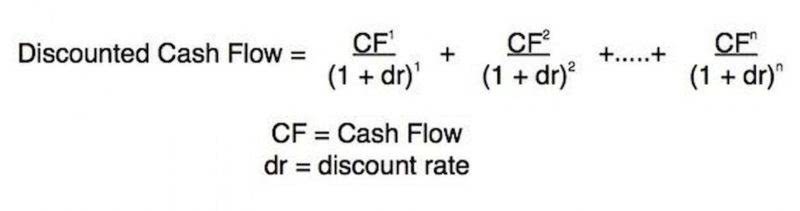
If an investment matures in more than 90 days, it should be classified in the section named “investments”. However, it’s important to note that not all current assets are cash and cash equivalents, as entries like accounts receivable will also be there. Accurately defining and managing cash and cash equivalents is crucial for cash flow management and financial reporting. Assets like treasury bills, commercial paper, and some Certificates of Deposits (CDs) are considered cash equivalents. Cash and cash equivalents are the most liquid assets, helping businesses pay bills and manage finances easily.
Cash and Cash Equivalents FAQs
- Brown Woods is a furniture manufacturing company that caters to the office furniture market.
- Cash and cash equivalents may not keep up with inflation, and exchange rate shifts may influence their value.
- Common examples of cash equivalents include Treasury bills, commercial paper, and money market funds.
- This ratio includes cash and equivalents, plus accounts receivable (money clients owe you).
- All of these assets have high liquidity, meaning that the owner could sell and convert these short-term investments into cash rather quickly.
Corporations issue commercial paper at a discount from face value and promise to pay the full face value on the maturity date designated on the note. A certificate of deposit (CD) is a product offered by a financial institution like a bank or credit union. In return, the deposits remain untouched for a certain period of time and are subject to a penalty if funds are withdrawn early. For example, investing in a three-month United States Treasury bill or a three-year U.S.

Tools like the cash ratio, quick ratio, and current ratio rely on cash equivalents to measure how prepared your business is to handle financial obligations. Companies try to maintain an increase in cash and cash equivalents for the purpose of meeting short-term cash commitments rather than for investment, or other purposes. Thus companies want a cash cushion to weather unexpected situations such as a shortfall in revenue, repair or replacement of machinery, or other unforeseen circumstances not in the budget. Cash equivalents have certain benefits over cash that make them better for some investors. However, both types of financial instruments are very similar and yield similarly low yields. A company should have enough cash and cash equivalents on hand to cover short-term needs, but not too much that could be put to better use elsewhere.